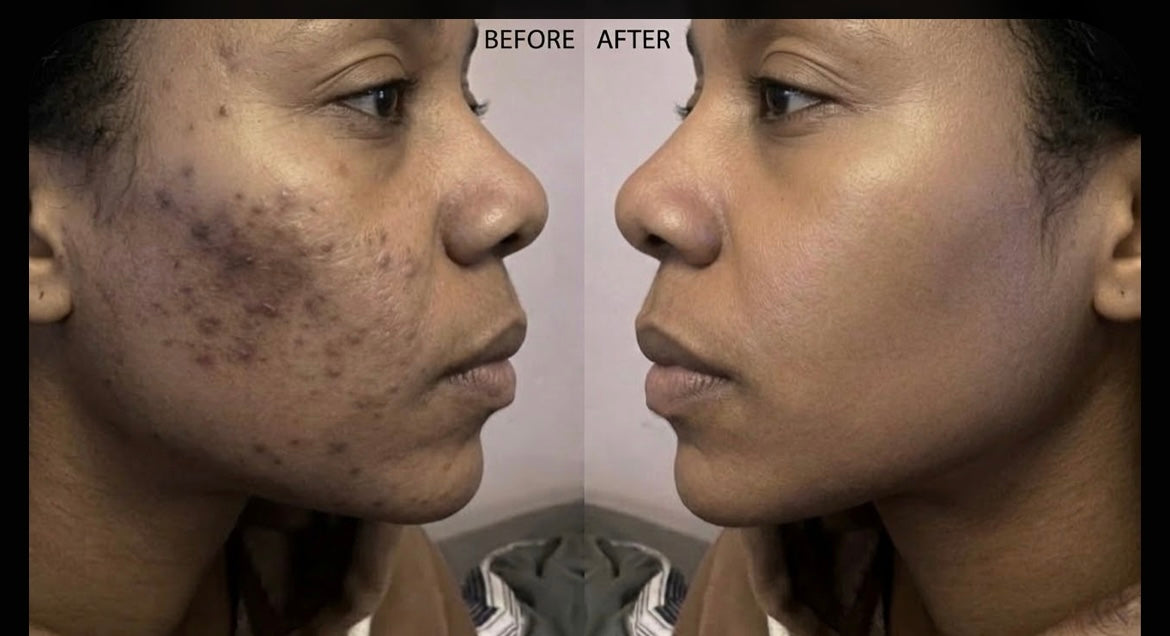
Niacinamide for Brightening: Why This Multi-Tasking Ingredient Belongs in Your Routine
If there's one ingredient that consistently earns its place in a skincare routine, it's niacinamide. Also known as vitamin B3, niacinamide has become a staple in dermatology-backed skincare for good reason: it delivers multiple benefits simultaneously, works well with other actives, and is gentle enough for nearly every skin type. At Kintari, it's a key supporting ingredient in our brightening formulas.
What Niacinamide Actually Does for Your Skin
Niacinamide is a water-soluble vitamin that communicates directly with skin cells to regulate several important functions. Here's what the research shows:
- Brightening: Niacinamide inhibits the transfer of melanosomes (melanin-containing packets) from melanocytes to keratinocytes. Less melanin reaching the skin's surface means a more even, brighter complexion over time. Studies show visible improvement in skin tone with consistent use over 4–8 weeks.
- Barrier support: It stimulates the production of ceramides and other lipids that form the skin's protective barrier. A stronger barrier means less moisture loss, less sensitivity, and more resilient skin overall.
- Pore appearance: By regulating sebum production and improving skin elasticity, niacinamide can reduce the appearance of enlarged pores over time.
- Anti-inflammatory: Niacinamide calms redness and irritation, making it especially valuable for skin prone to post-inflammatory hyperpigmentation (PIH) from acne or eczema.
How It Works Alongside Other Brightening Actives
One of niacinamide's greatest strengths is its compatibility. Unlike some potent actives that require careful layering or can't be used together, niacinamide plays well with almost everything:
- With tranexamic acid: These two ingredients target melanin production through different pathways — tranexamic acid blocks the plasminogen-melanocyte signaling pathway, while niacinamide interrupts melanin transfer. Used together (as in Eclipse Fade), they create a complementary, multi-pathway approach to fading dark spots.
- With alpha arbutin: Alpha arbutin inhibits tyrosinase, the enzyme that triggers melanin production. Paired with niacinamide's melanin-transfer blocking, the combination addresses hyperpigmentation from multiple angles.
- With vitamin C: Niacinamide and vitamin C can be used in the same routine — apply vitamin C in the morning (as in Radiance C Elixir) and niacinamide-containing products in the evening for a well-rounded brightening regimen.
Which Kintari Products Contain Niacinamide?
Niacinamide is formulated into Eclipse Fade alongside tranexamic acid, alpha arbutin, and licorice root extract. This combination makes Eclipse Fade a comprehensive brightening moisturizer — not just a single-ingredient treatment. Each ingredient reinforces the others, targeting hyperpigmentation through multiple mechanisms for faster, more visible results.
For best results, apply Eclipse Fade as the last step in your evening skincare routine after cleansing and any serums. Follow with SPF every morning — sun protection is essential to prevent new dark spots from forming and to protect the progress you're making.
Niacinamide is well-tolerated by most skin types, including sensitive skin. If you're new to active ingredients, it's an excellent starting point before introducing stronger actives like retinol or exfoliating acids.
See niacinamide in action. Shop Eclipse Fade →